
The Company We Keep
my new book, our relationships, & living in alignment


Listen to the essay here:
For the last 3 years, I’ve been thinking about how tired we all are.
Not the kind of tired that sleep fixes—but the kind that comes from explaining yourself too much. From staying in conversations that drain you. From holding onto relationships that no longer feel like home, but feel too familiar to leave. From carrying everyone’s heavy load with no one there to reciprocate or lighten yours.
Emotional exhaustion has been a topic of conversation with so many people that I know—friends, family, clients, students, and everyone else in between. Today, many of us aren’t looking for more people.
We’re looking for the right ones.
Choosing the company we keep wisely isn’t about cutting everyone off or becoming “hard to reach.” It’s about being honest enough to admit when a connection has changed—and brave enough to respond accordingly.
Because the truth is:
The people closest to you can shape and impact how you feel.
They influence how clearly you think.
They affect how often you second-guess yourself.
The company we keep teaches us—subtly, daily—what love feels like, or what it doesn’t.
For much of my adult life, I stayed loyal to history—and I was proud of it. I wore endurance like a virtue, telling myself, “I never left their side,” as if remaining in dysfunction were proof of character. If we had years together and shared memories, I believed that was enough. I stayed through lies, cheating, stealing, mistreatment, and more—in romantic and platonic relationships alike—convincing myself this was just how relationships worked.
You endure. You push through. You stay.
But healing and healthy relationships don’t ask us to stay where we’re being harmed. They ask us to shift—and to take honest inventory of who and what we allow to take up space in our orbit.
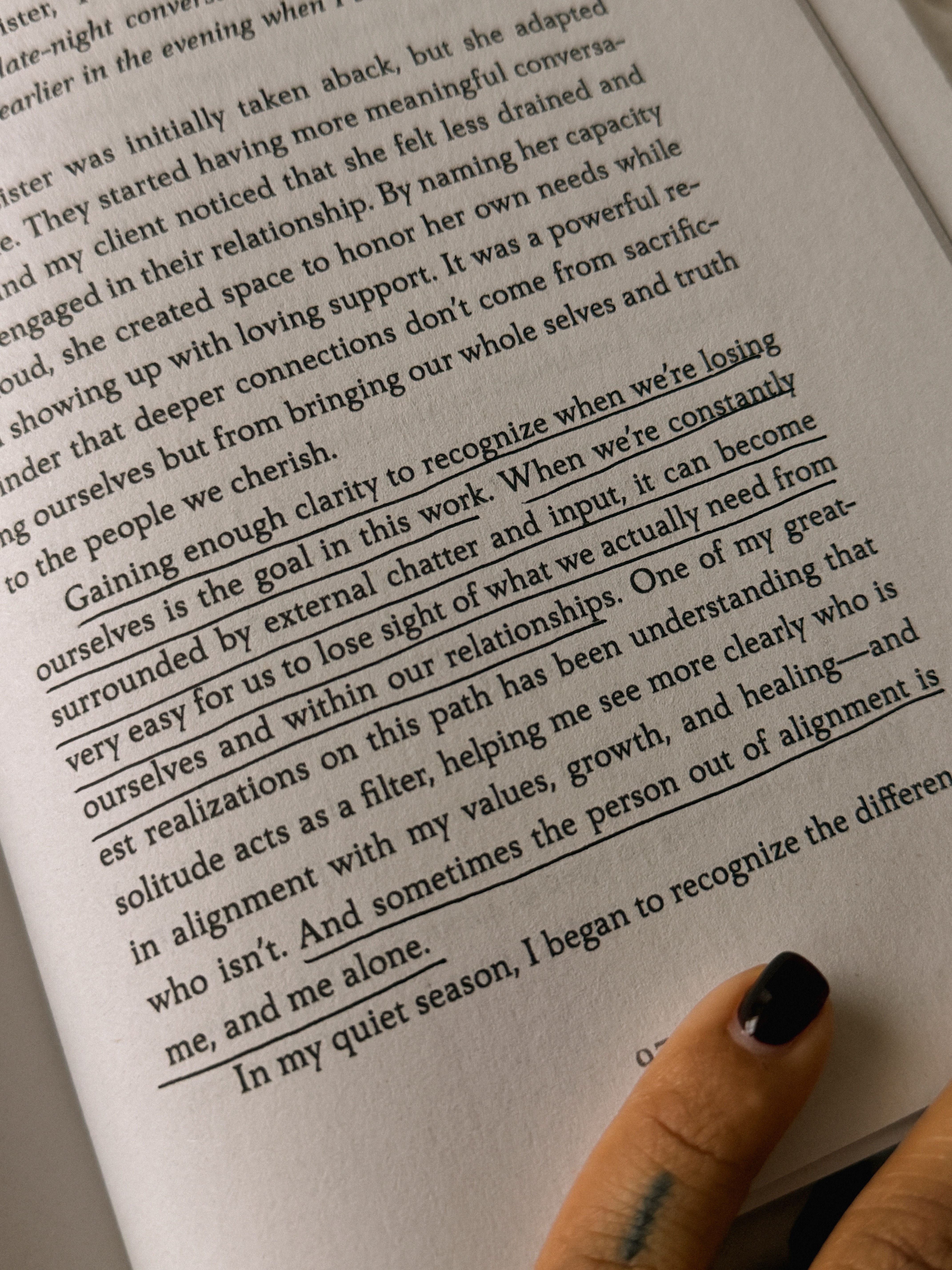
One of the hardest things to accept as an adult is that some people are seasonal, even if that season lasted 20 years. Longevity doesn’t equal alignment. It doesn’t guarantee care, emotional intimacy, growing together, or the ability to meet each other where you are today. And when a relationship changes, it doesn’t always signal failure—sometimes it signals an invitation for us to look more honestly at ourselves.
The last five years have taught me so much about what connection actually requires. Not chemistry, not history, or time spent—but effort, care, self-awareness, love (the verb), and emotional responsibility. I’ve learned that being close to someone doesn’t always mean you feel safe with them, and loving someone doesn’t mean they know how to care for you.
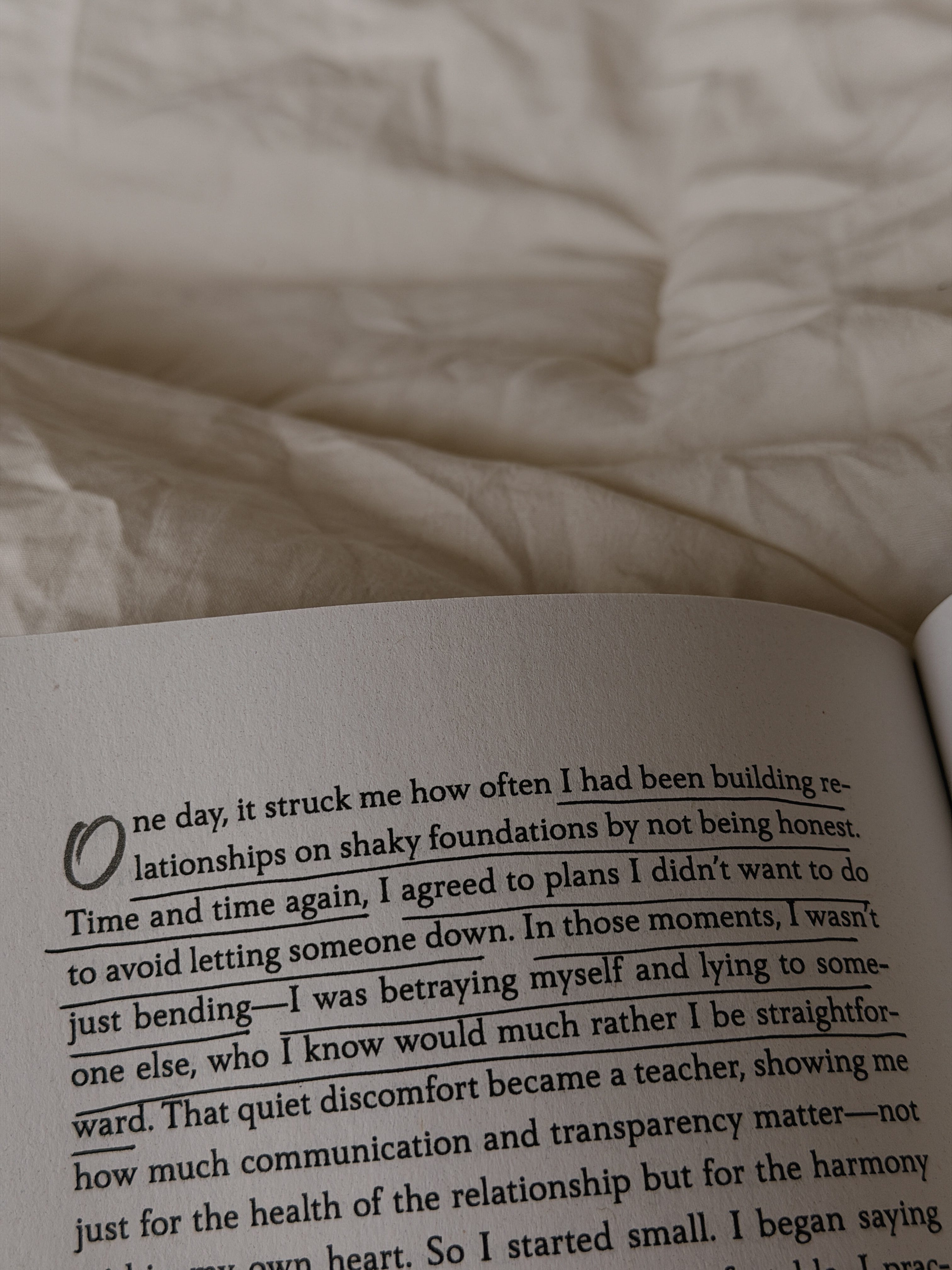
I’ve also had to face the harder truth: sometimes it’s not someone else. It’s me. My unspoken expectations. My avoidance of difficult conversations. My tendency to over-give and then quietly be pissed about it. My longing to stay even after I’ve been shown it’s time to wrap it up. Accountability taught me that proximity without honesty breeds resentment, and being silent in the name of peace is still a form of self-betrayal.
So I’ve learned to slow down and ask better questions: Not how do I make this work at any cost? but how do I actually feel in this connection?
Am I relaxed here, or am I bracing myself before every interaction? Can I tell the truth without being punished for it? Do I feel respected, or am I constantly editing myself to keep things smooth? When I leave, do I feel more grounded—or do I need time alone just to recover?
These questions aren’t about finding fault. They’re about honesty. They’re clarifying. And clarity has a way of changing everything when we’re honest. They remind me that love is not proven by endurance, but by care. That connection is not sustained by silence, but by responsibility. And that staying isn’t the same as choosing—especially when the cost is yourself.
Using discernment when choosing who we share space with doesn’t mean finding the “perfect people” or being in relationships that won’t have ebbs and flows. It means choosing accountable ones. People who can have uncomfortable conversations without turning them into character assassinations. People who can hear “this hurt me” without making it about their intent. People who understand that care isn’t just a feeling—it’s something you practice. When we are not in alignment with the right company, love without reciprocal effort will eventually exhaust us. And connection without self-awareness will confuse and create chaos. Our relationships are our mirrors. They reflect our worth, our pain points, our blind spots, and our most beautiful traits—all at once.
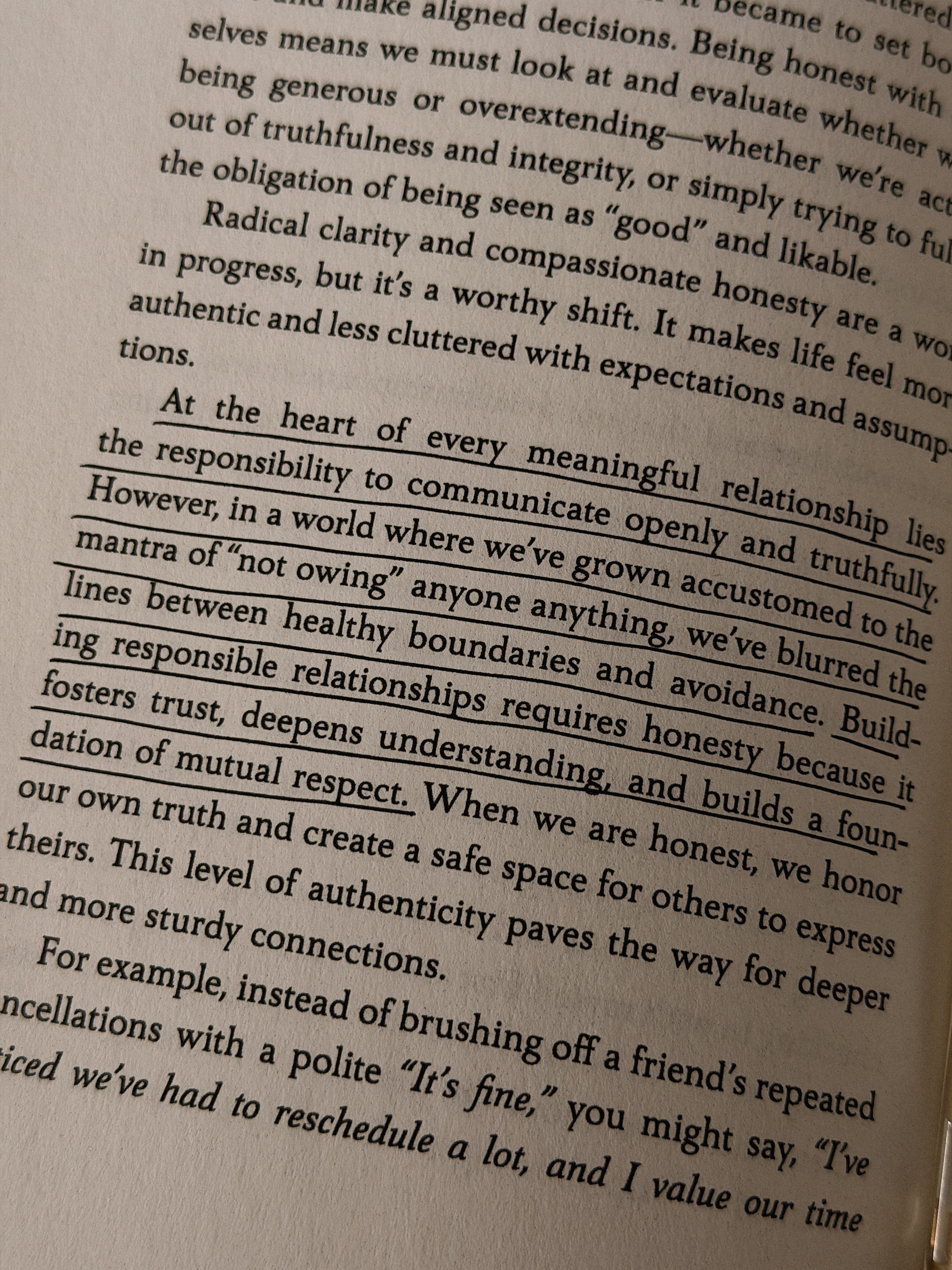
In 2026, I hope we choose relationships that don’t require self-abandonment in order to belong. I hope we choose friendships where clarity and care are welcomed, not punished or swept under the rug. I hope we stay close to the relationships that leave us feeling emotionally well-nourished more times than not. We all deserve to be in fellowship with people who don’t take growth personally but encourage it. Where silence isn’t weaponized or used to control. Where repair is possible—and where care continues to exist in healthy, human ways.
Choosing this requires us to stop negotiating our needs, stop settling for silence to avoid discomfort, and take responsibility for what we allow.
Sometimes choosing wisely looks like distance. Sometimes it looks like having a hard conversation that welcomes more depth and commitment to change.
Sometimes it looks like softer expectations or clearer boundaries. Sometimes it looks like repair, other times it looks like release.
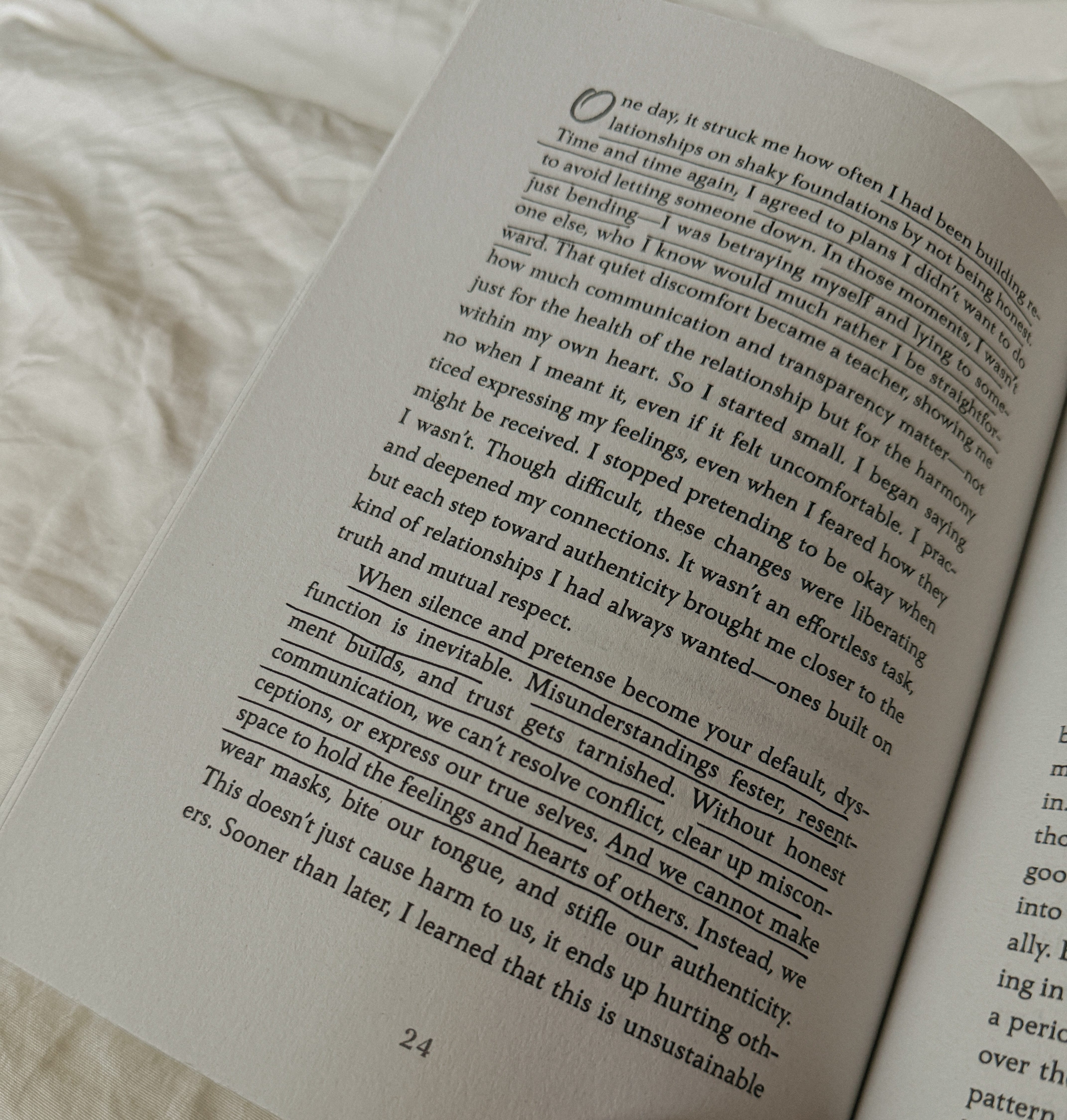
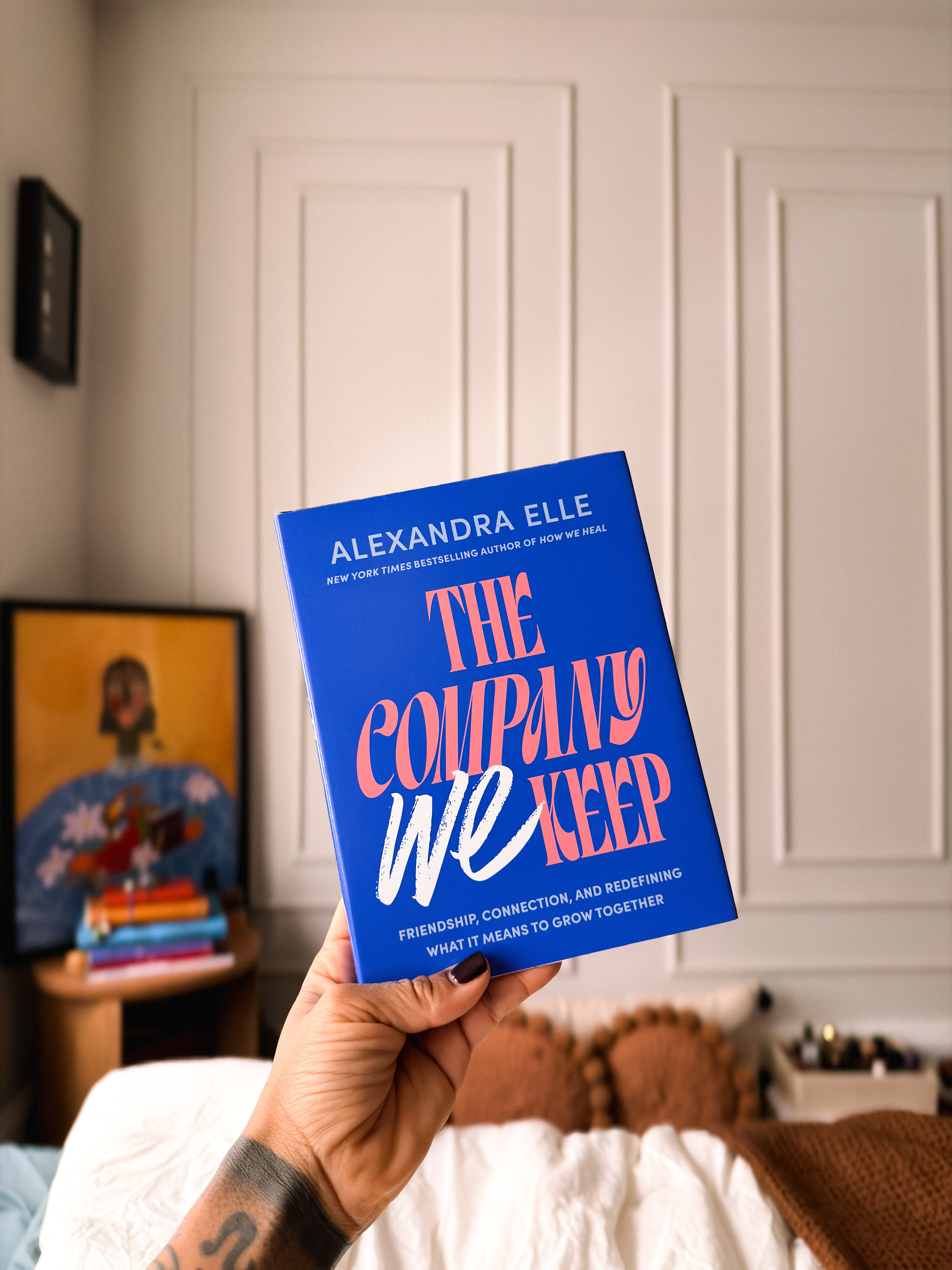
This is what The Company We Keep is really about. Not cutting people off at the first sign of conflict. Not becoming hardened because you’ve been hurt. Not shrinking yourself for the comfort of others.
It’s about learning to stop abandoning yourself in the name of loyalty and dying to be loved. It’s about recognizing when connection has turned into obligation—and choosing honesty over habit. It’s about understanding that the relationships you tolerate become the standard for how you show up, what you excuse, and what you normalize.
And that is why I wrote a book about it.
This body of work is for anyone who has ever felt guilty for wanting more ease in their relationships. For anyone who has stayed too long out of fear of being misunderstood. For anyone who is realizing that peace isn’t something you find—it’s something you protect.
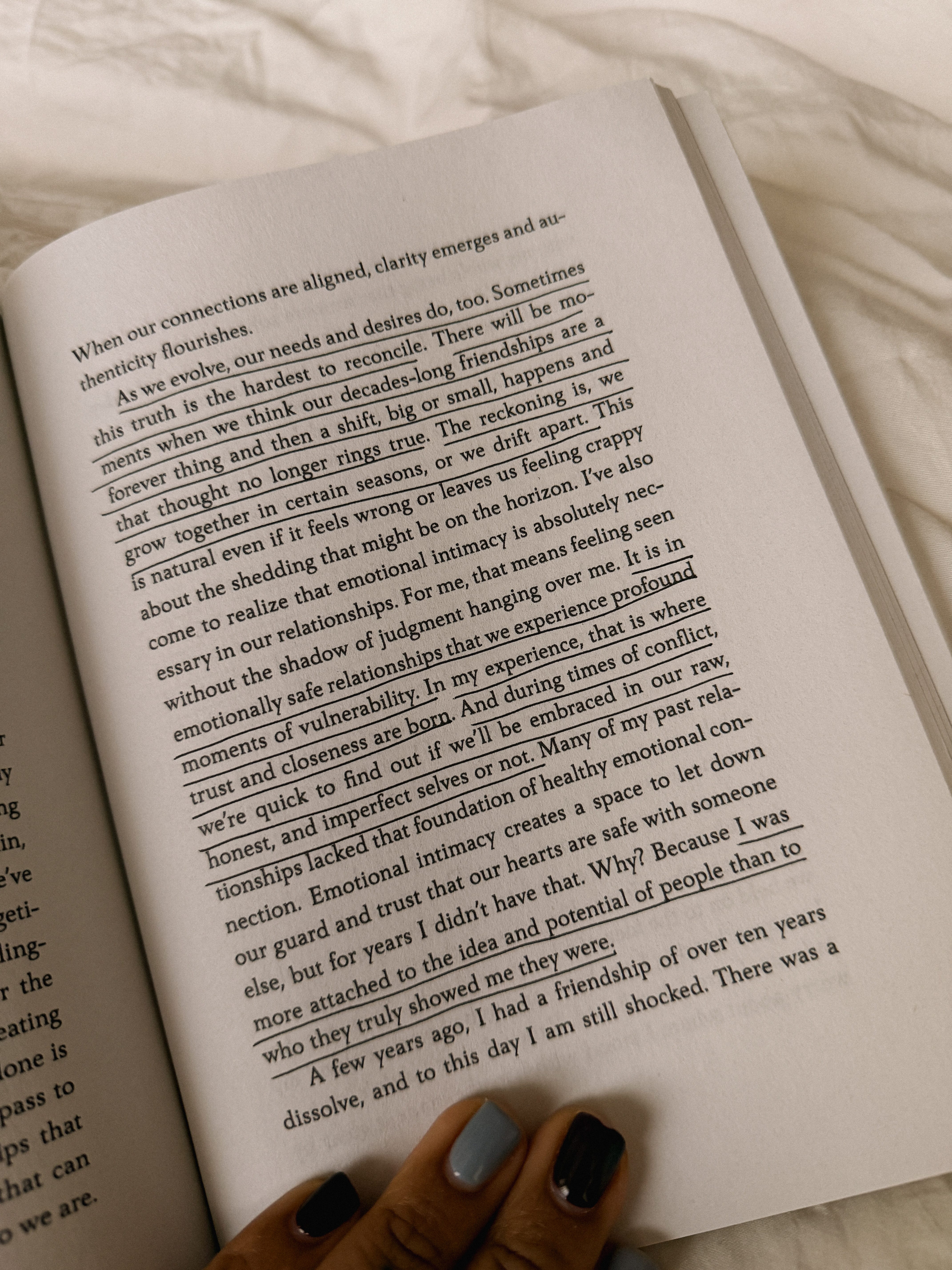
If I’ve learned anything while writing this book, it’s that we don’t need fewer relationships. We need more aligned ones. We need more clarity. We need more truth-telling about our capacity. We need more curiosity.
In 2026, may we choose the company we keep with intention—not out of habit, fear, or obligation, but from a place of self-respect. May we remember that the most important relationship we will ever tend is the one we have with ourselves, because it teaches us what care feels like when no one is watching.
How we speak to ourselves, protect ourselves, and show up for ourselves sets the tone for the honesty, effort, and depth we are able to offer others. And when we get that relationship right, the rest becomes clearer—not easier, but more true.

1k signed copies of my new book are available for pre-order at Mahogany Books—my fave local bookshop in DC.
I can’t wait to see y’all on tour so we can deep dive into this topic together. Thank you for being here and supporting my work. I am grateful!
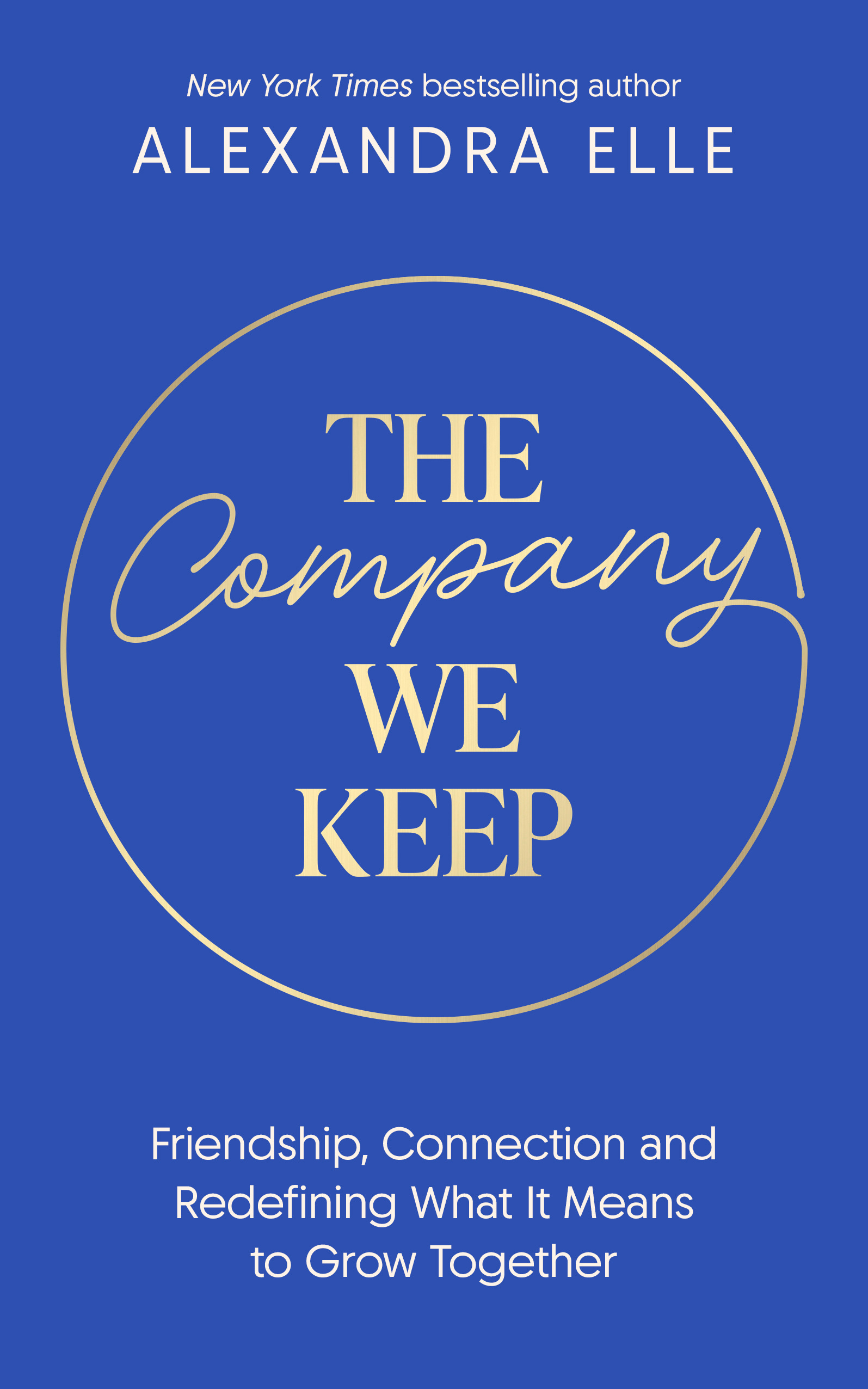
The UK cover of TCWK:
The way I’m trying to get out of my car and just had the ugliest cry reading the part about staying and BEING PROUD!
Tomorrow is moving day. I’m closing that (insert an embarrassing amount of years) year long chapter for good. We produced two wonderful humans and for that lll be grateful. Finally choosing me.
The way this all spoke to me, thank you for opening this space in your heart and sharing it with us. So much wisdom just from this post alone, excited to read it. Congratulations, Alex! 🖤